
Blog
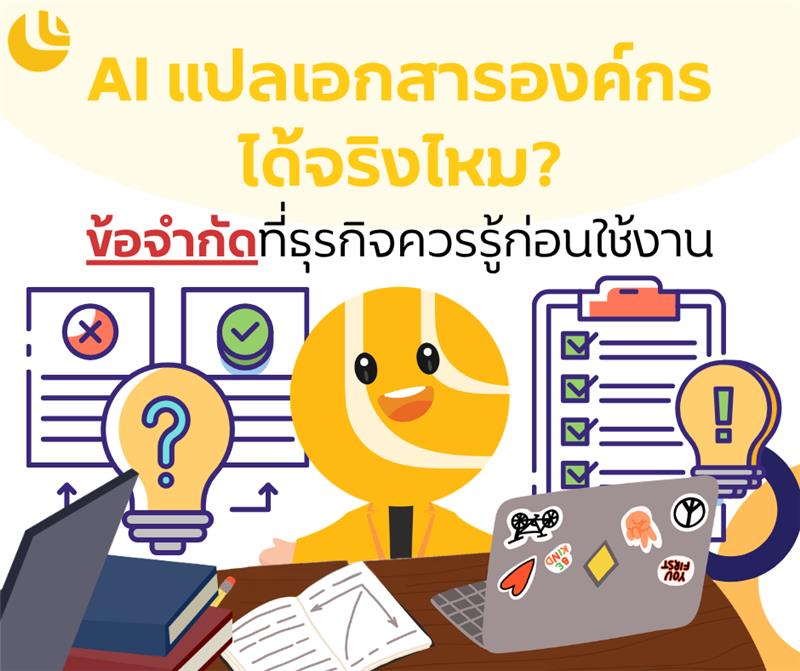
Can AI Really Translate Corporate Documents?: Limitations Businesses Should Know Before Using AI
In recent years, many organizations have adopted AI to translate business documents to reduce expenses and save time. Company profiles, proposals, TORs, and RFPs are just a few examples of documents frequently processed by AI.
While AI can significantly accelerate the translation process, understanding its limitations is crucial. This is because, at the end of the day, corporate documents define your organization's image and are therefore a key factor to business opportunities.
AI does a quick job, but it doesn't see the big picture
AI excels at translating general text, but corporate documents often require specific contexts. Official documents and bid tenders demand terminology that aligns with professional business styles and organizational standards.
If AI chooses words that are technically accurate but contextually inappropriate, the document may appear informal or fail to achieve its intended goal.
Terminology consistency remains a challenge
Many corporate documents contain specialized terminology, such as service names, organizational structures, or work processes. If the same term is translated inconsistently across different sections, readers may become confused, diminishing the document's credibility.
When a document is lengthy or contains numerous sections, AI often struggles to maintain a unified "voice" throughout.
An inappropriate structure may confuse the target audience
Even though AI is able to translate sentences accurately, the language structure may nevertheless follow the source language's format. In this case, what you get would be comprehensible but awkwardly written texts that feel like translations rather than polished business document..
For organizational documents, appropriate and natural language directly impacts the organization's credibility.
Critical documents require more than just timely delivery
Documents such as TORs, RFPs, or business contracts contain details that require precise interpretation. Even the slightest error in translation can impair reader comprehension or inadvertently alter negotiation terms.
In the end, AI is suitable as an initial tool, but expert review remains an essential step for documents intended for actual use.
Technology helps, but it takes genuine expertise to achieve perfection
Organizations may achieve speed and precision without sacrificing the quality of important documents by combining technology and expert assessment.
In the business world, an organization's chances can be directly determined by the distinction between "acceptable" and "credible" documents.
To ensure your organizational documents are not merely "translated" but are professionally prepared for any business context, choose LocalLight.